

If you want a simple place to start, match earthy oils with lower chakras, floral and citrus oils with the middle, and resinous oils with the upper chakras. I’d keep it simple: use cedarwood or vetiver for root, orange or ylang ylang for sacral, lemon or ginger for solar plexus, rose or lavender for heart, peppermint or chamomile for throat, frankincense for third eye, and sandalwood or neroli for crown.
Here’s the short version:
- Root: grounding and safety
- Sacral: pleasure, emotion, and art
- Solar Plexus: confidence and focus
- Heart: love and compassion
- Throat: truth and communication
- Third Eye: intuition and mental calm
- Crown: stillness and spiritual connection
A few safety rules matter just as much as the oils:
- Use about 12 drops per 1 fl oz of carrier oil for a 2% dilution
- Use about 6 drops per 1 fl oz for a 1% dilution
- Patch test and wait 24 hours
- Watch citrus oils in the sun for at least 12 hours
- For kids, keep dilution around 0.5% to 1%
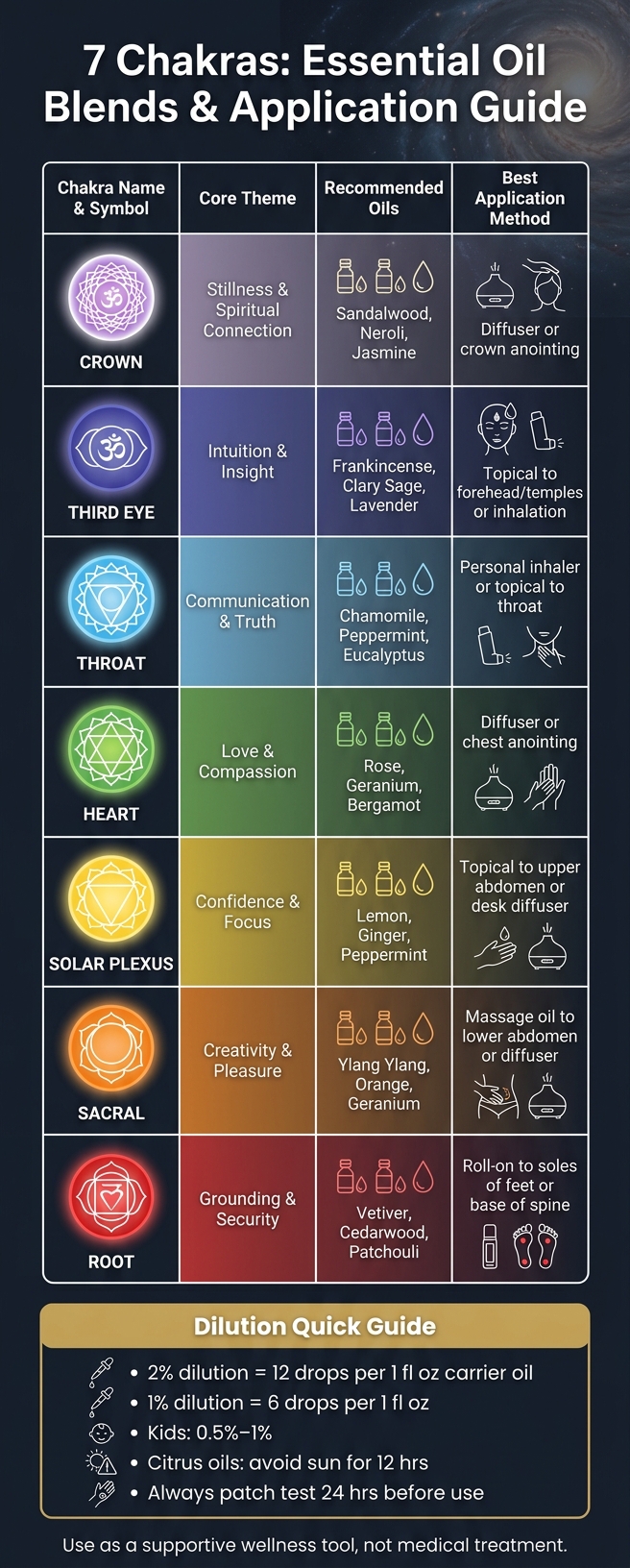
7 Chakras: Essential Oil Blends & Application Guide
How to Balance Chakras with Essential Oils
sbb-itb-a2327d8
Quick Comparison
| Chakra | Main Focus | Common Oils | Simple Use |
|---|---|---|---|
| Root | Grounding | Vetiver, Cedarwood, Patchouli | Soles of feet, base of spine |
| Sacral | Emotion, pleasure, art | Ylang Ylang, Orange, Geranium | Lower abdomen, spray, diffuser |
| Solar Plexus | Drive, focus | Lemon, Ginger, Peppermint | Upper abdomen, desk diffuser |
| Heart | Love, compassion | Rose, Geranium, Lavender | Chest area, diffuser |
| Throat | Speaking clearly | Chamomile, Peppermint, Rosemary | Throat area, inhaler |
| Third Eye | Intuition | Frankincense, Sandalwood, Lavender | Forehead, temples, diffuser |
| Crown | Stillness | Sandalwood, Neroli, Jasmine | Diffuser, inhalation |
I see this article as a simple guide for picking the right blend, using it safely, and deciding whether you need one chakra blend or a full root-to-crown routine.
Best Oil Blends for the Lower Chakras: Root, Sacral, and Solar Plexus
Start with the lower chakras to steady the body, lift your mood, and bring your focus back. These three centers work well as the base of a full alignment routine.
Root Chakra Blends for Grounding and Stability
If you feel scattered or off-balance, begin with root blends. Vetiver, cedarwood, patchouli, spikenard, and myrrh are the main oils for this chakra.
Apply a diluted root blend to the soles of your feet or the base of your spine during a stressful workday or before bed. It’s a simple ritual, but it can help you feel more settled. You can also pair this with hematite or smoky quartz for a deeper grounding effect.
A quiet diffuser blend of cedarwood, myrrh, and vetiver can also help set a calm, centered mood in your space. Once you feel more grounded, move into sacral work to bring back flow and expression.
Sacral Chakra Blends for Creativity and Emotional Flow
The sacral chakra responds well to ylang ylang, sweet orange, geranium, clary sage, sandalwood, and patchouli. Reach for these blends when you feel stuck, drained, or emotionally flat.
A sacral aroma spray can work well during movement, especially yoga, to help restore flow and joy. You can also apply a diluted blend to the lower abdomen before journaling, dancing, or making art. That shift from stillness into motion sets up the next step: solar plexus work for confidence and action.
Solar Plexus Blends for Confidence and Mental Clarity
Low motivation and mental fog can point to a solar plexus that needs support. Lemon, ginger, peppermint, and lemongrass are the oils most tied to this chakra. They’re often used to help with focus, momentum, and confidence.
One of the easiest ways to use them is to diffuse lemon or peppermint at your desk during work hours. For topical use, apply a diluted blend to the upper abdomen, above the navel. You can also pair solar plexus work with citrine or tiger's eye to support that motivated feeling, and add incense if you want to sharpen your focus even more.
Once these three centers feel steadier, move up to the heart, throat, and higher chakras.
Best Oil Blends for the Upper Chakras: Heart, Throat, Third Eye, and Crown
These upper chakras are tied to emotion, self-expression, inner sight, and spiritual connection. That’s why the blends here feel softer, quieter, and more meditative.
Heart and Throat Blends for Emotional Healing and Clear Expression
For the heart chakra, lean on rose, geranium, bergamot, lavender, and ylang ylang. Apply a diluted blend over the breastbone during compassion meditation or deep breathing. If you want to deepen the moment, place rose quartz nearby.
For the throat chakra, use chamomile, peppermint, eucalyptus, spearmint, or rosemary. Apply a diluted blend to the throat area and repeat the intention: "I speak my truth clearly."
Once the heart feels softer and the voice feels more open, shift into Third Eye oils for a calmer kind of focus.
Third Eye Blends for Intuition and Calm Focus
Frankincense and sandalwood are the main anchors for the Third Eye. Lavender, rosemary, peppermint, and clary sage can also support focus. These oils fit well with meditation, tarot reading, breathwork, or visualization.
For topical use, apply a diluted blend to the center of your forehead or your temples. Use 6 drops of essential oil per 1 oz of carrier oil for a 1% dilution. You can also diffuse frankincense or sandalwood during meditation. As you settle in, use the intention: "I trust my inner wisdom."
From there, move into Crown blends for quiet and spiritual connection.
Crown Blends for Stillness and Spiritual Connection
The crown chakra is usually best approached through diffusion or inhalation. Sandalwood, lavender, neroli, jasmine, and lotus are the oils most linked with stillness and spiritual openness.
Diffusing sandalwood or neroli during quiet contemplation can help set a calm, intentional mood. Adding amethyst nearby can strengthen that sense of stillness. If you also use tarot cards or a dreamcatcher in your space, the mix of scent, symbol, and sacred object can make even a short session feel grounded and meaningful.
How to Use Chakra Oil Blends in a Full Alignment Ritual
Scent can shift mood fast because essential oils act on the limbic system. From there, move through the chakras from root to crown.
A Step-by-Step Root-to-Crown Oil Ritual
Before you begin, gather your oils and set one intention. For a 10 mL roller bottle, add 10 drops of blend and fill the rest with fractionated coconut oil or sweet almond oil.
Use this sequence when you want a full alignment ritual, not a single-chakra session.
- Root - Apply vetiver to the soles of your feet or the base of your spine. Picture roots growing down into the earth.
- Sacral through Solar Plexus - Apply diluted blends to the lower abdomen, then the upper abdomen. Picture each center as a spinning wheel of colored light.
- Heart through Third Eye - Move on to the center of the chest, throat, and forehead with your diluted blend.
- Crown - Finish with frankincense at the top of your head. Then sit quietly for 5 to 10 minutes and let the ritual sink in.
If diffusion feels like a better fit, use the blends in a diffuser instead. Add 4 to 8 drops per diffuser session.
Setting Up a Calming Ritual Space at Home
You don't need much. Crystals, salt lamps, singing bowls, or copper bracelets can help ground the space. A simple setup keeps your attention on the scent work instead of the room itself.
Tracking Which Blends Work Best for You
Write down your mood, physical sensations, and intuitive impressions before and after each session. It doesn't need to be fancy. A few lines in a notebook can go a long way.
Over time, those notes can show which scent profiles tend to work best for you - earthy, floral, citrus, or resinous. That makes it easier to pick your next blend without overthinking it.
How to Choose the Right Chakra Blend for Your Needs
Use this section as a simple decision guide for full chakra alignment. You can pick one chakra when a specific block stands out, or build a broader routine when you want more overall balance.
Chakra Blend Quick-Reference Table: Key Oils and Best Use Formats
Use this table to match a chakra to a symptom, then choose the format that fits your routine.
| Chakra | Location | Core Life Theme | Recommended Oils | Best Application Format |
|---|---|---|---|---|
| Root | Base of spine | Grounding, Security | Vetiver, Patchouli, Cedarwood | Roll-on (soles of feet) or massage oil |
| Sacral | Lower abdomen | Creativity, Pleasure | Ylang Ylang, Orange, Jasmine | Massage oil or diffuser |
| Solar Plexus | Upper abdomen | Power, Confidence | Lemon, Ginger, Black Pepper | Topical (diluted) or diffuser |
| Heart | Center of chest | Love, Compassion | Rose, Geranium, Bergamot | Diffuser or chest anointing |
| Throat | Throat | Communication, Truth | Chamomile, Peppermint, Eucalyptus | Personal inhaler or topical dab |
| Third Eye | Forehead | Intuition, Insight | Frankincense, Clary Sage, Lavender | Topical (forehead) or inhalation |
| Crown | Top of head | Spiritual Connection | Sandalwood, Lotus, Myrrh | Diffuser or crown anointing |
A simple shortcut helps here: earthy oils tend to support grounding, floral oils often work well for emotional balance, citrus oils can feel more energizing, and resinous oils are often used for meditation. Lower chakras usually pair well with earthy oils like vetiver and patchouli. Upper chakras often pair better with lighter oils like frankincense, lavender, and sandalwood. Match the blend to what you want help with right now.
Single-Chakra Blends vs. Full Alignment Routines: A Side-by-Side Look
If one chakra is clearly the issue, a targeted blend is usually the fastest way to start.
| Feature | Single-Chakra Blends | Full Alignment Routines |
|---|---|---|
| Primary Goal | Target one issue | Support whole-system balance |
| Convenience | High - easy to use as a portable roll-on | Lower - requires more time for a root-to-crown ritual |
| Customization | Highly specific | More balanced |
| Best Format | Pulse-point roller or targeted massage | Diffusion or a 7-day rotating schedule |
Here’s the basic rule. If you can name the issue - feeling ungrounded, stuck in a creative block, or struggling to make decisions - go with a single-chakra blend. If you feel off in a more general way, like you’re sluggish or out of sync without one clear problem, a full root-to-crown routine usually makes more sense.
Conclusion: The Best Blends to Start With
Once you know your goal, the next move is simple: start small.
If you're new to chakra oils, begin with lavender, frankincense, lemon, orange, and cedarwood. That gives you a solid base across several chakra themes without making things feel complicated. Then you can add more targeted blends as you figure out which centers need the most support. Pick the oil that fits your intention and start with the chakra theme you need most now.
Use these blends as supportive wellness tools, not medical treatment.
FAQs
How do I know which chakra to start with?
Start with the chakra that feels the most out of balance. Pay attention to where you feel ungrounded, stressed, or just off. Then connect that feeling to common chakra themes, like physical insecurity with the root chakra or creative blocks with the sacral chakra.
You can also trust your gut by noticing which essential oils you feel pulled toward. And if things feel heavy or hard to sort through on your own, it may help to talk with an energy therapist for deeper guidance.
Can I mix oils for more than one chakra?
Yes, you can create a single blend to support multiple chakras. The main thing is to pay attention to how each oil works so the blend feels balanced, not at odds with itself.
For safe topical use, always dilute essential oils in a carrier oil and do a patch test first. Rivendell Spiritual Gifts offers oils and wellness products to support your practice.
What carrier oil is best for chakra blends?
For topical chakra blends, mix essential oils with a carrier oil first. This helps protect your skin and can help the oils spread more evenly.
Common carrier oils include coconut oil, jojoba oil, grapeseed oil, and sweet almond oil.
These oils help bring essential oils onto the skin while lowering the chance of irritation. You can use them in:
- massage blends
- roller-ball bottles
- direct application to specific chakra points