

Essential oils are powerful and concentrated, making proper dilution critical for safe use. Without dilution, these oils can cause skin irritation, burns, or long-term allergies. To dilute, mix essential oils with carrier oils like jojoba, coconut, or sweet almond oil. General guidelines recommend a 2% dilution for adults (12 drops per 1 oz of carrier oil, like those in a breathe essential oil set) and lower concentrations for children (such as using a wellness essential oil pack), sensitive skin, or facial use. Always perform a patch test before full application, avoid direct use in baths without dispersants, and store oils in dark glass bottles to maintain quality. Proper dilution not only ensures safety but also extends the effectiveness of your oils.
Diluting Essential Oils: Everything You Always Wanted to Know
sbb-itb-a2327d8
Recommended Dilution Ratios
Essential Oil Dilution Ratios Guide for Safe Use
When working with essential oils, precision is key. Using percentages to measure dilution ensures accuracy across various units - whether you're counting drops, measuring milliliters, or weighing grams. This approach helps you create blends that are both effective and safe. Below, you'll find practical ratios and guidelines to simplify the process.
How to Calculate Dilution Percentages
A 1% dilution means that 1% of your blend consists of essential oil. A quick rule of thumb? One drop of essential oil per teaspoon of carrier oil equals roughly a 1% dilution.
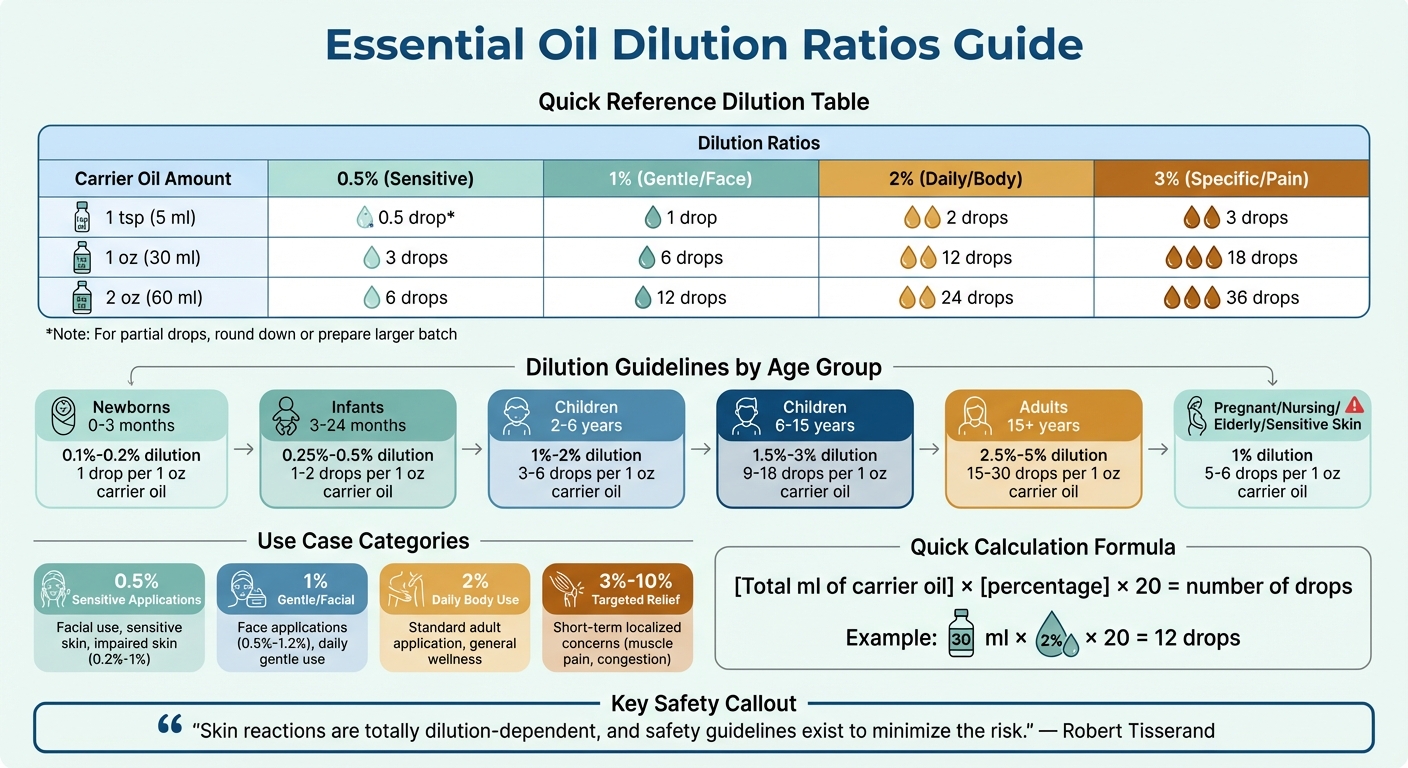
For those who prefer exact measurements, here's the formula: [Total ml of carrier oil] x [percentage] x 20 = number of drops. For example, to make a 2% dilution in 1 oz (30 ml) of carrier oil, the calculation would be: 30 x 2 x 20 = 12 drops. While this method is precise, professionals often measure by weight, as drop size can vary depending on the oil's thickness and the type of dropper used.
Here’s a quick-reference table for common measurements:
| Carrier Oil Amount | 0.5% (Sensitive) | 1% (Gentle/Face) | 2% (Daily/Body) | 3% (Specific/Pain) |
|---|---|---|---|---|
| 1 tsp (5 ml) | 0.5 drop* | 1 drop | 2 drops | 3 drops |
| 1 oz (30 ml) | 3 drops | 6 drops | 12 drops | 18 drops |
| 2 oz (60 ml) | 6 drops | 12 drops | 24 drops | 36 drops |
*For partial drops, round down or prepare a larger batch to maintain accuracy.
Dilution Guidelines for Adults and Children
For healthy adults, a 2% dilution works well for daily use, equating to about 12 drops per ounce of carrier oil. For short-term, localized concerns like muscle pain or congestion, you can safely increase this to 3%–10%. Research shows that a 5% dilution is effective for conditions such as acne and chronic itch, while 3%–5% concentrations are often used to ease menstrual pain.
Children, however, need much gentler concentrations. For kids aged 2 to 6 years, stick to 1%–2% dilutions. Those between 6 and 15 years can safely use 1.5%–3%. For infants aged 3 to 24 months, aim for 0.25%–0.5%, and for newborns under 3 months, only use 0.1%–0.2% in very specific cases.
"Skin reactions are totally dilution-dependent, and safety guidelines exist to minimize the risk." – Robert Tisserand
Pregnant women, older adults, and those with sensitive or compromised skin should limit themselves to a 1% dilution and consult a healthcare provider before use.
Lower Dilutions for Facial and Sensitive Areas
When it comes to your face, extra care is essential. Facial applications should stay between 0.5% and 1.2% dilutions to protect the delicate skin from irritation. Even if higher concentrations are used for the body, always reduce to 1% or less for facial use. For individuals with sensitive or impaired skin, stick to a range of 0.2%–1%. Starting with the lowest dilution is always the safest move - you can gradually increase if necessary, but once sensitization occurs, it cannot be reversed.
How to Choose the Right Carrier Oil
Carrier oils come from the fatty parts of plants, like seeds or nuts, and play an important role in using essential oils effectively. Essential oils are highly concentrated and evaporate quickly, so carrier oils help slow down evaporation, extend coverage, and improve absorption. Since essential oils dissolve easily into carrier oils, this combination enhances how well your skin absorbs the benefits.
Unlike essential oils, carrier oils are "fixed", meaning they don't evaporate. This stability helps anchor the essential oil's aroma and benefits to your skin while reducing waste. Think about this: it takes 50 lemons to produce just 15 ml of lemon essential oil. Using a carrier oil ensures you get the most out of every drop while keeping usage safe and effective.
Types of Carrier Oils and Their Benefits
Picking the right carrier oil depends on your skin type, how quickly you want the oil to absorb, and how long you need it to last. Here are some popular options:
- Jojoba oil: Technically a liquid wax, it closely resembles your skin's natural sebum, making it perfect for oily or acne-prone skin. It also has an impressive shelf life of five years or more.
- Fractionated coconut oil: Odorless and non-greasy, this oil absorbs quickly, making it great for massages or daily use. It resists rancidity and can last up to two years.
- Avocado oil: Packed with vitamins A, D, and E, this oil deeply hydrates dry or mature skin. Its shelf life is typically one to two years.
- Sweet almond oil: A gentle, all-purpose option that's rich in vitamin E. However, it oxidizes faster and should be used within 6–12 months.
- Rosehip seed oil: Known for its high vitamin C content, this oil supports tissue regeneration, making it ideal for scars, stretch marks, or aging skin. Its shelf life is shorter, around 6–12 months.
- Grapeseed oil: Lightweight and mildly astringent, it's a good choice for oily skin but oxidizes quickly.
- Argan oil: Absorbs well and is excellent for anti-aging care, with a shelf life of about two years.
- Tamanu oil: Valued for its wound-healing properties, it's another great option for skincare.
When choosing a carrier oil, look for "cold-pressed" varieties. This extraction process avoids heat and chemicals, preserving the oil's nutrients. Steer clear of mineral oil (like baby oil), as it's petrochemical-based and creates a barrier that blocks essential oil absorption.
How to Store and Handle Carrier Oils
Proper storage is just as important as choosing the right oil. It helps maintain potency and safety over time. Always keep carrier oils in dark glass bottles - amber or cobalt blue are ideal - to protect them from UV light, which speeds up oxidation. Store them in a cool, dark place, ideally between 50°F and 70°F. Oils high in polyunsaturated fats, like hemp seed, rosehip, and grapeseed, should be refrigerated to prevent them from going bad quickly.
Make sure caps are sealed tightly to keep out oxygen and moisture, which can cause rancidity. Use clean tools, like pipettes or glass stir rods, to avoid contamination. Label each bottle with details like the oil type, dilution percentage (if mixed), and the purchase date. This helps you track freshness. Check your oils regularly - if the smell becomes "flat" or "off", it’s a sign the oil has oxidized and should be discarded. To keep your oils fresh, mix small batches that you can use within three to six months. This ensures you're always working with the best quality.
Step-by-Step Guide to Diluting Essential Oils
Once you've chosen your carrier oil, it's time to mix your blend. While the process is simple, accuracy is critical - proper measurements ensure both safety and effectiveness.
Measuring the Right Amount of Carrier Oil
Stick to one measurement system (either volume or weight) throughout your formulation. Mixing systems can throw off your ratios and lead to imprecise blends.
Use tools like measuring spoons, graduated cylinders, or marked glass bottles for precision. Many aromatherapy enthusiasts start with 1 ounce (30 ml) of carrier oil as a base - it makes percentage calculations easier. For smaller containers, such as 10 ml roll-on bottles, adjust the recipe proportionally. For instance, if a recipe calls for 6 drops of essential oil in 30 ml, you’d use 2 drops for 10 ml.
Here’s a quick reference for carrier oil volumes:
| Carrier Oil Volume | Tablespoons | Teaspoons | Milliliters |
|---|---|---|---|
| 1.0 oz | 2 Tbsp | 6 tsp | 30 ml |
| 0.5 oz | 1 Tbsp | 3 tsp | 15 ml |
| 0.33 oz | 0.66 Tbsp | 2 tsp | 10 ml |
Always start by pouring the carrier oil into your mixing container. Add any solids, such as beeswax or shea butter, into the total volume if you’re making a balm or salve. Once the carrier oil is accurately measured, you can incorporate the essential oils drop by drop.
Adding Essential Oils: Drop-by-Drop Guide
After measuring your carrier oil, carefully add the essential oil drops. Most essential oil bottles come with an orifice reducer, which allows for precise, drop-by-drop dispensing.
The general rule of thumb is that 1 milliliter of essential oil equals about 20 drops. For a 1% dilution in 30 ml of carrier oil, you’ll need 6 drops; for a 2% dilution, use 12 drops.
Keep in mind, thicker oils may dispense more slowly than thinner ones. Start with the minimum number of drops suggested - you can always add more, but you can’t remove excess. After adding the drops, mix thoroughly by shaking the bottle or stirring with a clean utensil. Store your blend immediately in a dark glass bottle to protect it from light and oxidation. Finally, always conduct a patch test to ensure safety before using the blend.
How to Perform a Patch Test
A patch test helps identify potential irritation or allergic reactions before applying your blend to larger areas. The risk of a reaction increases with higher essential oil concentrations.
To perform the test, apply one drop of your diluted blend to a small area of skin, such as the inner forearm or inside the elbow. Wait 24 hours, as some reactions may take time to develop. Watch for signs like redness, itching, swelling, or any systemic symptoms such as headaches, nausea, or dizziness.
"Adverse skin reactions are obvious when they happen, but systemic toxicities may not be. Skin reactions are totally dilution-dependent, and safety guidelines exist to minimize the risk."
- Robert Tisserand, Essential Oil Safety Expert
If irritation occurs, apply plain carrier oil (not water) to the area immediately. The carrier oil will dilute and help remove the essential oil from your skin. For those with sensitive skin or conditions like eczema or rosacea, stick to lower dilutions (0.5–1%) and be extra cautious during patch testing. If no irritation occurs after 24 hours, your blend is ready to use.
Dilution Techniques for Non-Topical Applications
When it comes to non-topical uses like baths, sprays, and steam inhalation, proper dilution is just as important as it is for topical blends. These methods ensure safety and effectiveness while reducing the risk of irritation.
Using Essential Oils in Baths
Adding undiluted essential oils directly to your bathwater is a big no-no. Since oils don't mix with water, they can float on the surface, forming concentrated droplets that cling to your skin and might cause stinging or even chemical burns.
"Essential oils do not mix with water, they float in tiny droplets on the surface, and you are about to sit on those droplets of undiluted essential oil." - Robert Tisserand, Founder, Tisserand Institute
To safely use essential oils in your bath, always mix them with a carrier like coconut oil, jojoba oil, or liquid Castile soap beforehand, or try DIY aromatherapy recipes for safe blending. A good starting point is 2–6 drops of essential oil per tablespoon (15 ml) of carrier, which creates a 2–4% dilution. Depending on the oil and your skin's sensitivity, you may need up to 20 drops per tablespoon.
Be cautious with common DIY dispersants like Epsom salts, baking soda, or milk - they don’t actually mix the oil into the water. While salt dissolves, it won’t help disperse the oil, and milk only forms a temporary emulsion that separates quickly. For better results, consider using specialized dispersants like Solubol, Polysorbate 20/80, or Natrasorb bath starch, which are designed to blend oils into water-based solutions.
Making Aromatherapy Sprays
For room or linen sprays, a typical dilution is 1–2%. In a 4 oz (120 ml) spray bottle, this equals about 30 drops (roughly 1 ml) of essential oil.
To ensure the oils are evenly distributed, you’ll need an emulsifier. As Sherilyn Siegmund-Roach, Clinical Aromatherapy Practitioner at Herbal Academy, explains:
"If your essential oil is not fully dispersed throughout the mixture, it is not properly diluted."
Start by mixing the essential oil with an emulsifier like 160-proof alcohol, witch hazel, or liquid Castile soap in a 1:1 ratio. Shake this mixture thoroughly, then gradually add distilled water while continuing to mix. For a standard 1% spray, aim for a formula of 90% water, 9% alcohol, and 1% essential oil. Always store these sprays in glass bottles, as essential oils can break down certain plastics. And don’t forget to shake the bottle gently before each use. Keep in mind that regular vodka, with only 40% alcohol content, won’t work effectively as a dispersant.
Dilution for Steam Inhalation
Steam inhalation calls for even gentler dilution. Just 1 drop of essential oil in a bowl of steamy (not boiling) water is enough to provide therapeutic benefits while avoiding respiratory irritation.
After adding the oil, lean over the bowl and cover your head with a towel to trap the steam. Keep your eyes closed during the process to protect them from the volatile compounds. If the steam feels overwhelming, you can remove the towel or let the water cool slightly. Limit each session to 15–20 minutes to avoid overloading your respiratory system. Be extra cautious with oils like clove, cinnamon, oregano, and thyme, which are high in phenols or aldehydes and may irritate the respiratory tract.
Safety Precautions for Vulnerable Groups
Some groups need extra care when using essential oils, particularly when it comes to dilution and oil selection. Infants, children, pregnant or nursing individuals, and the elderly have unique sensitivities, making lower concentrations and careful application essential.
Essential Oil Safety for Children
Children’s skin is thinner and more absorbent than adult skin, making them more prone to irritation from essential oils. Because of this, lower concentrations are a must - typically half the amount used for adults in similar situations.
Never apply undiluted essential oils directly to a child’s skin.
"Peppermint used on children under 30 months of age can increase a risk for seizures", says Dr. Rachel Dawkins, a pediatrician at Johns Hopkins All Children's.
Additionally, oils like citronella should not be used on infants under 6 months.
| Age Group | Recommended Dilution | Drops per 1 oz (30ml) Carrier Oil |
|---|---|---|
| 0–3 months | 0.1%–0.2% | 1 drop (highly diluted) |
| 3–24 months | 0.25%–0.5% | 1–2 drops |
| 2–6 years | 1%–2% | 3–6 drops |
| 6–15 years | 1.5%–3% | 9–18 drops |
| 15+ years (Adult) | 2.5%–5% | 15–30 drops |
Before applying any oil, perform a 24-hour patch test on a small area of skin. Also, avoid adding undiluted essential oils directly to bath water, as the concentrated droplets can irritate the skin or even be accidentally ingested.
Pregnancy and Nursing Considerations
For pregnant and nursing individuals, it’s recommended to stick to a 1% dilution (about 5–6 drops per 1 oz of carrier oil). Since essential oils can be absorbed through the skin and enter the bloodstream, they have the potential to affect both the mother and baby.
Certain oils should be avoided entirely during pregnancy, including Clary Sage, Sage, Tansy, Hyssop, Fennel, and Wintergreen. Wintergreen, in particular, poses risks after 20 weeks of pregnancy due to its methyl salicylate content - a compound similar to aspirin that can carry NSAID-related risks.
Always consult a midwife, doctor, or certified aromatherapist before using essential oils during pregnancy or while nursing. While small amounts of essential oils in toiletries or food are generally safe, concentrated oils used in aromatherapy require professional oversight.
Guidelines for Elderly and Sensitive Skin
Older adults and those with sensitive skin conditions like eczema, psoriasis, or dermatitis benefit from gentler dilutions. Similar to infants, elderly individuals have thinner skin, which increases absorption rates and the likelihood of irritation. Stick to low dilutions, ranging from 0.2% to 1% - roughly 1 to 6 drops per 1 oz of carrier oil.
For damaged or highly sensitive skin, limit dilution to 0.5% to 1% to reduce irritation risks. If you’re on medications, consult a healthcare provider before using essential oils, as interactions can occur. For those with reactive skin, consider indirect methods like applying diluted oils to clothing or using a diffuser pendant.
Gentle carrier oils like jojoba are a safe choice, as they closely mimic the skin’s natural oils and are well tolerated. Always do a 24-hour patch test on your inner forearm before extended use. If you notice redness, burning, or itching, wash the area immediately with carrier oil rather than water.
Conclusion
Key Takeaways
Dilution is the cornerstone of safe aromatherapy because essential oils are incredibly concentrated - up to 100 times more potent than the plants they come from. Just one drop packs a powerful punch. Without proper dilution, there’s a real risk of skin irritation, chemical burns, or even long-term allergic reactions.
For most adults, a 2% dilution (around 10–12 drops of essential oil per 1 ounce of carrier oil) is ideal for general use. However, for sensitive areas or groups like children and the elderly, gentler ratios of 0.5% to 1% are recommended. As Robert Tisserand, a leading voice in aromatherapy, wisely notes:
"Increasing concentration always increases risk, but may not increase benefit".
Higher concentrations don’t necessarily mean better results. Proper dilution not only minimizes risks but also helps essential oils absorb better and work longer. Carrier oils play a crucial role by spreading the essential oils evenly over the skin and slowing evaporation, giving the active compounds more time to do their job.
To ensure safe use, always do a patch test before applying oils broadly. Avoid adding essential oils directly to bathwater without a dispersant, and store your blends in dark glass bottles, keeping them cool and dry. These precautions protect your skin, preserve the quality of your oils, and make your aromatherapy practice safer and more effective.
Explore Wellness Products at Rivendell Spiritual Gifts

Now that you’re equipped with the basics of dilution, take your aromatherapy journey to the next level with Rivendell Spiritual Gifts. Their thoughtfully curated collection includes premium essential oils, carrier oils, and more. Whether you’re crafting custom blends, enhancing your daily self-care, or experimenting with botanicals, Rivendell has everything you need to practice safely and effectively. Explore their range of wellness products - including incense, aromatherapy candles, crystals, and spiritual tools (including tips on how to cleanse and charge your crystals) - at Rivendell Spiritual Gifts and elevate your holistic lifestyle.
FAQs
Can I dilute essential oils with water?
No, essential oils should never be diluted with water for skin application. Since essential oils are hydrophobic, they don’t mix with water, which can cause uneven application and potentially irritate the skin. Instead, always combine them with a carrier oil - like coconut oil, jojoba oil, or almond oil - for safe and even dilution.
What should I do if an essential oil blend irritates my skin?
If an essential oil blend causes skin irritation, start by washing the affected area gently with mild soap and water. To ease discomfort, you can apply a cool compress or use a hydrocortisone cream. If the irritation doesn’t improve, it’s a good idea to reach out to a healthcare professional for further advice.
How long do diluted essential oil blends last?
Diluted essential oil blends generally stay good for about a year when stored properly. Their lifespan can vary based on the types of oils in the blend and how they’re kept. To help them last longer, store them in a cool, dark spot and make sure to use airtight containers.