

Essential oils can help balance the seven chakras, energy centers in the body that influence physical, emotional, and spiritual well-being. When chakras are blocked, you might experience discomfort, stress, or disconnection. Using specific oils can help clear these blockages and restore harmony. Here's a quick guide to the best oils for each chakra:
-
Root Chakra (Muladhara): Patchouli Oil
Promotes grounding, stability, and security. Apply to the feet or base of the spine. -
Sacral Chakra (Svadhisthana): Ylang-Ylang Oil
Supports creativity, sensuality, and emotional balance. Massage on the lower abdomen. -
Solar Plexus Chakra (Manipura): Lemon Oil
Boosts confidence, clarity, and motivation. Use on the upper abdomen or diffuse. -
Heart Chakra (Anahata): Rose Oil
Opens the heart to love, compassion, and emotional healing. Apply to the chest. -
Throat Chakra (Vishuddha): Eucalyptus Oil
Encourages clear communication and self-expression. Massage on the throat area. -
Third Eye Chakra (Ajna): Frankincense Oil
Enhances intuition and spiritual connection. Apply to the forehead or inhale. -
Crown Chakra (Sahasrara): Lavender Oil
Promotes calmness and spiritual awareness. Use on the crown or diffuse.
To use these oils, dilute them with a carrier oil for topical application, diffuse them during meditation, or add them to a bath. Each oil aligns with specific chakras, helping to restore energy flow and balance. Always perform a patch test and follow safety guidelines for essential oils.
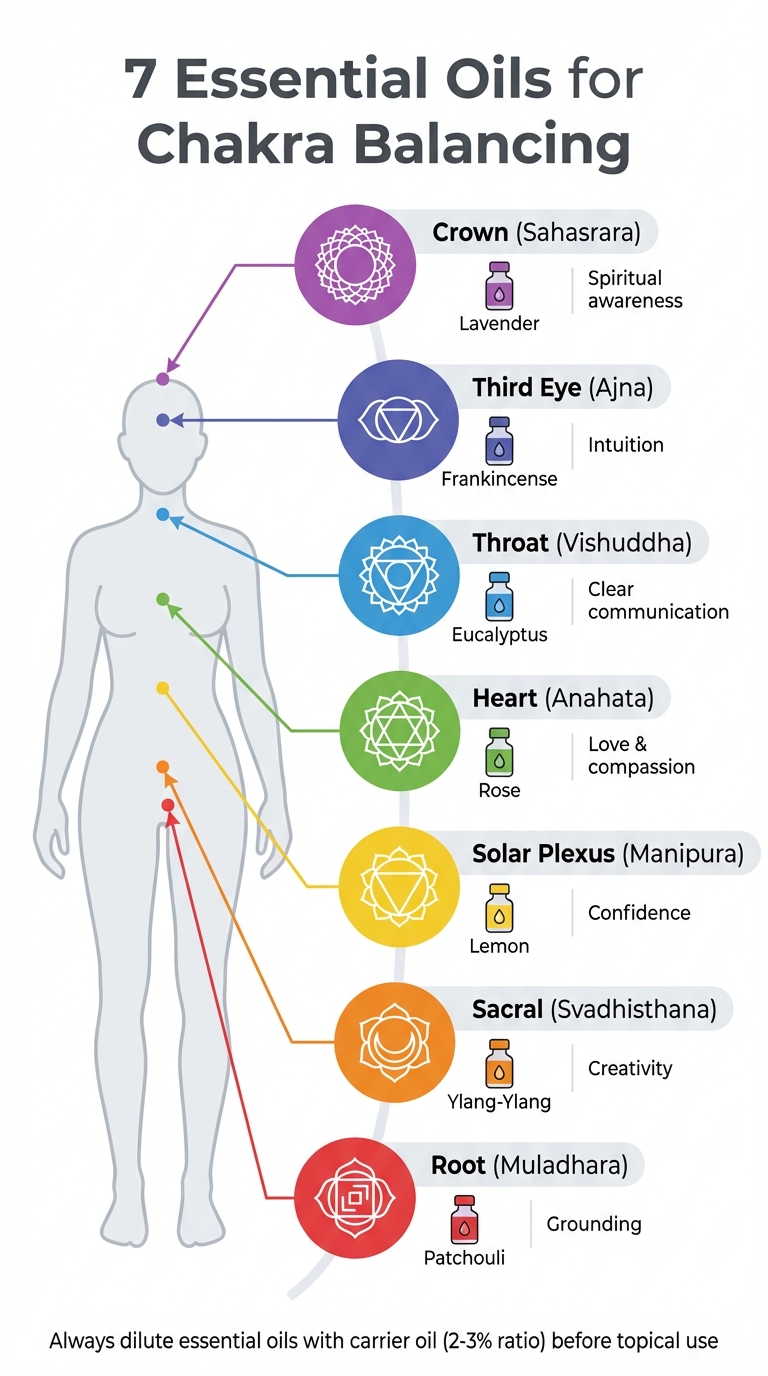
7 Essential Oils for Chakra Balancing Guide
Essential Oils for Chakra Balancing
sbb-itb-a2327d8
1. Patchouli Oil for Root Chakra (Muladhara)
Balancing the root chakra is like building a sturdy foundation for your energy system. This chakra, located at the base of your spine, is all about safety, stability, and your connection to the physical world. When it's out of balance, you might feel anxious, ungrounded, or disconnected. Patchouli oil, known for its rich, earthy scent, is a popular choice for bringing this chakra back into harmony.
How Patchouli Supports the Root Chakra
Patchouli's grounding and stabilizing qualities make it a natural fit for the root chakra. Michelle Markham, Admin of Natural Remedies – Herbs and Essential Oils, explains:
"Patchouli is the Oil of Physicality. Clumsiness, low energy, focus, sexual issues, and body shame are all symptomatic of a weak or closed root chakra."
By using patchouli, you can address these imbalances, fostering a sense of security and helping dispel fear.
Aromatherapy and Relaxation
Patchouli oil is classified as a "base note" in aromatherapy, meaning its scent is heavy and long-lasting. This makes it effective for calming an overactive root chakra and soothing the nervous system. Its aroma encourages relaxation and helps create a sense of balance.
How to Use Patchouli Oil for the Root Chakra
- Mix 2–3 drops of patchouli oil with a carrier oil and massage it into the soles of your feet or the base of your spine.
- Add 1–2 drops to aromatherapy jewelry for grounding support throughout the day.
- Diffuse 5–10 drops during meditation to enhance your connection to the present moment.
Once you've worked on the root chakra, you're ready to explore essential oils for the sacral chakra.
2. Ylang-Ylang Oil for Sacral Chakra (Svadhisthana)
The sacral chakra, located in the lower abdomen, is the center of creativity, sensuality, and emotional harmony. When this chakra is blocked, you might feel creatively stuck, emotionally detached, or struggle to connect with others. Ylang-ylang oil, with its sweet and floral scent, can help restore balance to this vital energy center.
How Ylang-Ylang Supports the Sacral Chakra
Ylang-ylang directly targets the sacral chakra by helping to release emotions like guilt, shame, and jealousy - feelings that often block energy flow. It’s known for enhancing mood and breaking down emotional barriers that hinder creativity and self-expression. Aromatherapist Emma Carter highlights this chakra's significance:
"The sacral chakra is the place where our sense of masculine and feminine balance; where our expressions of emotion, sensuality and sexuality are possible."
Additionally, ylang-ylang is a natural aphrodisiac. It can heighten sensuality, boost libido, and help harmonize masculine and feminine energies.
Benefits in Aromatherapy
This oil is also effective in calming the nervous system, easing stress, and fostering feelings of joy, confidence, and peace. Many turn to it for overcoming creative slumps or issues like writer’s block.
Simple Ways to Use Ylang-Ylang for Chakra Work
- Massage: Combine 5 drops of ylang-ylang oil with a tablespoon of carrier oil and gently massage it into your lower abdomen.
- Meditation: Apply a diluted drop to your wrists or temples, then visualize a warm, spinning orange light in your lower abdomen as you meditate.
- Diffusion: Add 4–8 drops to a diffuser during yoga, especially poses like Child’s Pose, to deepen your connection to this energy center.
Up next, discover how Lemon Oil can energize your Solar Plexus Chakra.
3. Lemon Oil for Solar Plexus Chakra (Manipura)
The solar plexus chakra, found just below your sternum, is the center of personal power, self-confidence, and willpower. When this chakra is out of balance - either blocked or overactive - you might notice issues like low self-esteem, trouble making decisions, or even digestive problems. Lemon oil, with its refreshing and uplifting scent, can help restore balance to this energetic center.
How Lemon Oil Aligns with the Solar Plexus Chakra
Known for its ability to elevate mood, lemon oil works particularly well with the solar plexus chakra. Its bright, yellow energy harmonizes with this chakra's fiery nature. Aromatherapist Emma Carter highlights this connection:
"Lemon Essential Oil is a cooling essential oil and can ease an over-active solar plexus chakra by bringing it to balance."
This essential oil helps clear mental fog, increase motivation, and improve focus. It also lowers levels of corticosterone, a stress hormone that can sap your inner strength. The result? Greater clarity, boosted confidence, and a stronger sense of control over your life.
Benefits Beyond Chakra Work
Lemon oil isn't just for chakra balancing - it’s also a powerful mood enhancer and immune booster. Its invigorating scent, often described as "a burst of sunshine", can lift feelings of sluggishness and help you feel more grounded. Additionally, its digestive support aligns with the solar plexus chakra's connection to the stomach, liver, and pancreas.
How to Use Lemon Oil for Chakra Balancing
- Diffusion: Add 3–5 drops to your diffuser in the morning or while working to promote confidence and focus.
- Topical Application: Mix lemon oil with a carrier oil like coconut or jojoba. Massage this blend onto your upper abdomen or the soles of your feet.
- Meditation: Dilute a drop of lemon oil, rub it into your palms, and inhale deeply while visualizing a radiant golden-yellow light emanating from your solar plexus.
Important Note: Lemon oil can make your skin more sensitive to sunlight. If applied topically, avoid direct sun exposure for at least 12 hours.
Next up: Rose Oil for heart chakra healing.
4. Rose Oil for Heart Chakra (Anahata)
The heart chakra, located at the center of your chest, plays a key role in love and emotional balance. When this chakra is blocked, you might wrestle with grief, feel emotionally closed off, or struggle to accept yourself and others. Rose oil, often referred to as the "Queen of Oils", is widely regarded as an essential tool for opening and healing this vital energy center.
How Rose Oil Supports the Heart Chakra
Rose oil directly connects with the heart chakra, helping to break down emotional barriers and restore your capacity to give and receive love freely. Unlike other oils, rose oil specifically nurtures the heart's energy, offering profound emotional renewal. Aromatherapist Jennifer Lane highlights its importance:
"Rose oil is one of the most healing essential oils for the heart chakra. It is known for its ability to open up the heart to love and compassion, bringing self-acceptance and inner peace."
This oil is particularly effective in addressing emotional wounds caused by heartbreak, betrayal, or loss [33, 34]. It helps shift your energy from feelings of isolation and defensiveness to trust and connection. Additionally, it promotes self-compassion, aiding in overcoming feelings of unworthiness or struggles within relationships [35, 39].
Emotional and Physical Benefits of Rose Oil
Beyond its chakra-balancing abilities, rose oil offers a range of emotional and physical benefits. Its scent stimulates the limbic system, helping to reduce cortisol levels and alleviate anxiety. Known for its unmatched spiritual frequency, rose oil can uplift your mood and create a profound sense of well-being. The process of creating rose oil is no small feat - producing just 2.2 pounds of the oil requires about 8,800 pounds of rose petals, demonstrating its rarity and potency.
Simple Ways to Use Rose Oil for Heart Chakra Work
Incorporating rose oil into your heart chakra practices is straightforward and effective. Here are a few methods to try:
- Topical Application: Mix 2–3 drops of rose oil with a teaspoon of carrier oil. Massage the blend over your heart center in a clockwise motion [34, 35].
- Diffusion: Add 5–10 drops to your diffuser to create a calming, healing environment.
- Direct Inhalation: Place 1–2 drops on a tissue or rub a diluted drop between your palms, then breathe deeply.
- Pulse Points: Apply diluted rose oil to your wrists or temples for ongoing emotional support [34, 8].
Important Note: Rose oil is highly concentrated. Always dilute it with a carrier oil before applying it to your skin to avoid irritation [36, 34].
Once your heart chakra feels balanced, you can move on to explore the next step: aligning your throat chakra with the right essential oil.
5. Eucalyptus Oil for Throat Chakra (Vishuddha)
The throat chakra, located at the base of your throat, is all about communication, self-expression, and speaking your truth. When this chakra is blocked, you might find it hard to express yourself, feel anxious in social settings, or even experience physical issues like sore throats or sinus problems. Eucalyptus oil is known for clearing both physical and energetic blockages, helping to restore open and honest communication.
How Eucalyptus Aligns with the Throat Chakra
Eucalyptus oil is particularly effective for helping you reconnect with your "authentic voice", especially if you’ve been holding back from speaking up. Massage therapist Sarah McCallum highlights its dual benefits:
"Eucalyptus essential oil... can help clear up blockages on a physical and spiritual level."
Physically, its anti-inflammatory properties reduce swelling around the vocal cords, making it easier to speak and express yourself. On a spiritual level, eucalyptus oil works as a purifier, easing both physical discomfort and mental stress. If you’ve been feeling overwhelmed or stifled, this oil can help create the calm and balance needed for self-expression.
Aromatherapy Benefits
Eucalyptus oil’s fresh, camphorous scent is invigorating, promoting mental clarity and lifting your spirits. Its cooling aroma not only soothes mental fatigue but also calms the mind, helping energy flow more freely throughout your body. Since the throat chakra serves as a bridge between your earthly and spiritual energies, this sense of clarity is essential for balanced communication.
On a physical level, eucalyptus oil’s decongestant, antiviral, and anti-inflammatory properties help clear your sinuses and respiratory system. This "drainage system" for the throat chakra allows energy to move without obstruction.
Simple Ways to Use Eucalyptus Oil
Adding eucalyptus oil to your throat chakra routine is easy. For a topical massage, dilute it to a 3% concentration (about 3 drops per 5 ml of carrier oil) and gently massage it over your throat area. Sarah McCallum emphasizes its quick relief:
"Applying eucalyptus essential oil to the neck and throat will help to quell any soreness in that area almost immediately."
If you prefer diffusion, add 8 drops of eucalyptus oil to your diffuser to refresh the air and enhance mental clarity. Another effective method is using it in the shower: rub 5–7 drops between your hands and apply to your wet skin during a steamy shower (avoiding your face). The steam activates the oil, clearing your sinuses and throat chakra. You can also mix 8 drops into bath salts for a relaxing soak.
With eucalyptus oil, you can open your throat chakra and speak with clarity and confidence. Next, discover how frankincense oil can support your third eye chakra. You can also explore our full collection of tools to open your third-eye chakra.
6. Frankincense Oil for Third Eye Chakra (Ajna)
The third eye chakra, located in the center of your forehead just above the base of your nose, is tied to intuition, foresight, and spiritual connection. When this chakra is blocked, it can lead to mental fog, difficulty trusting your inner wisdom, and a sense of spiritual disconnection. For thousands of years, frankincense oil has been celebrated - from Ancient Egypt to early Christian traditions - for its ability to enhance spiritual awareness and clear energetic blockages. It offers specific benefits that align with the unique needs of this energy center.
How Frankincense Supports the Third Eye Chakra
Frankincense is known for its ability to stimulate the pineal gland, which is often considered the physical counterpart of the third eye. This connection bridges physical and spiritual awareness. Scarlet Strapko, a NAHA Certified Professional Aromatherapist, highlights its wide-ranging effects:
"Frankincense essential oil increases spiritual awareness, aids with visualization, supports focus and concentration, and creates balance."
In addition to boosting spiritual awareness and focus, frankincense is said to work with healing violet rays, helping to clear mental fog and harmonize the creative and logical sides of the brain.
Aromatherapy Benefits
The warm, resinous aroma of frankincense brings an immediate sense of calm and spiritual grounding. It helps shift the mind from overthinking to a state of meditative clarity. Many users report experiencing enhanced intuition and clearer visions when incorporating this oil into their practice.
Easy Ways to Use Frankincense Oil
- Forehead Application: Mix 2 drops of frankincense oil with 1 teaspoon of carrier oil. Gently apply it to the center of your forehead, being careful to avoid the eyes.
- Quick Inhalation: Place a drop of the oil on your palms, rub them together, and hold your hands about 6 inches from your face. Inhale deeply for one to two minutes before meditation.
- Diffusion: Add 3 drops to a diffuser with water to fill your space with clarity-enhancing energy. Alternatively, apply diluted oil to pulse points on your neck and wrists for ongoing aromatic benefits.
When you use frankincense to activate your third eye, you may notice sharper intuition and a deeper spiritual connection. You can also pair oils with third eye chakra crystals to further amplify your practice. Next, discover how lavender oil can harmonize your crown chakra.
7. Lavender Oil for Crown Chakra (Sahasrara)
The crown chakra, located at the top of your head, connects you to higher consciousness. When this chakra is out of balance, you might feel disconnected, stuck in negative thought patterns, or unsure of your purpose. Lavender oil, often referred to as a "universal oil", can harmonize all seven chakras, but it’s particularly effective for opening the crown chakra .
Specific Chakra Alignment Properties
Lavender oil helps quiet the mind and soften the ego, both of which can block spiritual connection . Lacey, a Spiritual Life Coach at Mind Body Elements, shares:
"The floral aroma of lavender promotes a sense of peace, helping to quiet the mind and prepare it for meditation and spiritual practices."
By reducing stress and soothing anxiety, lavender enables you to reach a state of calm awareness, making it easier to access higher levels of consciousness. This creates a supportive foundation for deeper spiritual exploration.
Aromatherapy Benefits
Lavender’s gentle floral scent promotes immediate relaxation, setting the tone for spiritual practices. It serves as a sensory anchor during meditation, helping you stay focused while elevating your energy to align with universal vibrations. Its dual action is particularly useful - it can either calm an overactive crown chakra (marked by excessive thinking or detachment from reality) or energize an underactive one when you feel spiritually stagnant. Beyond chakra alignment, lavender supports overall mental health by alleviating anxiety, easing depression, and improving sleep quality.
Ease of Use for Chakra Balancing Practices
- Direct Application: Mix 2–3 drops of lavender oil with a teaspoon of carrier oil and massage it into your crown or temples before meditating . For safe use, maintain a 2% dilution ratio - roughly 3 to 6 drops of lavender per teaspoon of carrier oil.
- Quick Inhalation: Add a drop of lavender to your palms, rub them together, and cup them over your nose and mouth. Breathe deeply while imagining a glowing violet or white light radiating from the top of your head .
- Diffusion: Use 3–5 drops in a diffuser to create a calming atmosphere in your meditation space . For a deeper spiritual connection, try a blend of 3 drops of lavender, 2 drops of frankincense, and 1 drop of sandalwood.
Incorporating lavender oil into your chakra work can help you feel deeply connected to the universe and gain clarity about your spiritual journey.
How to Use These Oils for Chakra Balancing
Before using any essential oil, take a moment to set a clear intention. Your focus plays a key role in directing energy flow. As Kiara McBain, Founder of Ki Yoga, puts it:
"Trust whatever you experience. This is all very subjective, and so is the energy body. There's no prescription that is 100% right".
By incorporating these methods, you can tap into the unique qualities of each oil to help clear energy blockages and bring balance to your chakras. Choosing the right application method can help guide your energy and awaken each chakra’s potential.
Topical application offers a direct way to channel the oils’ effects. Start by diluting the essential oil with a carrier oil - such as fractionated coconut, jojoba, or sweet almond - at a 2–3% ratio (around 6–9 drops per 10 mL). Gently massage the blend onto the chakra area in a clockwise motion, visualizing its vibrant, spinning light. McBain suggests starting at the crown chakra if your mind feels overstimulated, or at the root chakra if you need grounding.
Diffusion creates a calming environment, ideal for practices like meditation or yoga. Add 3–5 drops of essential oil to an ultrasonic diffuser with 200 mL of water to create an atmosphere that supports clarity and focus, especially for the crown and third eye chakras. Alternatively, you can rub a single drop of oil between your palms, inhale deeply, and pair this method with visualization exercises.
Bath additions provide a full-body experience, making them particularly effective for grounding the root chakra and activating the sacral chakra. Simply add 3–5 drops of essential oil to warm bath water, ensuring it’s pre-mixed with a carrier oil if necessary. As you soak, repeat affirmations like, "I am safe and supported" to align with the root chakra's energy. Be sure to perform a patch test first and avoid sun exposure after using citrus oils.
Conclusion
Essential oils can help bring harmony to your body, mind, and spirit by aligning their unique vibrations with your chakras. This alignment promotes balance, enhances clarity, and strengthens your spiritual connection.
"Chakra balancing using essential oils is a profound and transformative practice, offering holistic benefits that extend beyond the physical realm." – Lively Living
One of the best parts of this practice is how effortlessly it fits into your routine. Whether you're meditating, practicing yoga, or focusing on breathwork, these oils can easily complement your efforts. Interestingly, the scents you're instinctively drawn to might reveal exactly what your energy body needs. Over time, regular use of chakra-focused aromatherapy can help maintain the balance you've achieved and support your overall well-being.
For safe application, dilute essential oils to a 2–4% ratio with a carrier oil like coconut or jojoba. Alternatively, add 3–5 drops to an ultrasonic diffuser to enjoy their benefits through aromatherapy.
To deepen your practice, consider exploring high-quality spiritual tools. Check out Rivendell Spiritual Gifts for a selection of essential oils, aromatherapy products, and other wellness items. Visit rivendellshop.co.nz to take your chakra balancing journey to the next level.
FAQs
How do I know which chakra is blocked?
Blocked chakras can manifest in various ways - physically, emotionally, or mentally. For example, if your Root Chakra is blocked, you might feel insecure or lack energy. On the other hand, a blocked Heart Chakra could make it hard to give or receive love openly. Specific symptoms can also point to imbalances, like frequent headaches (linked to the Third Eye Chakra) or a sore throat (associated with the Throat Chakra). By paying close attention to your body and emotions, you can identify these imbalances and explore healing methods such as meditation or using essential oils.
Can I blend oils for multiple chakras?
Yes, it's possible to combine oils to address multiple chakras at once. Many blends are crafted specifically for this purpose and can be used in diffusers or applied directly to the skin, depending on your preference. Just make sure the oils you choose are suitable and safe for your intended method of application.
Are these oils safe for sensitive skin?
When used correctly, these essential oils are typically safe for sensitive skin. That said, certain oils, such as lavender, can sometimes cause irritation if applied undiluted or in excessive amounts. To avoid any issues, always dilute essential oils properly and perform a patch test on a small area of skin to check for any adverse reactions.