

The right carrier oil can change how a blend feels, how fast it sinks in, and which skin types it fits best. If I had to sum this up in one line, it would be this: pick oils by fatty acids, skin feel, shelf life, and pore-clogging risk.
Here’s the short version:
- Light oils like grapeseed, jojoba, and apricot kernel work well when you want a thin feel and fast absorption.
- Richer oils like avocado, sweet almond, and coconut are better for dry skin, body oils, and massage.
- Rosehip and argan are often chosen for face oils because they bring fatty acids plus antioxidant compounds.
- Linoleic-rich oils usually feel lighter.
- Oleic-rich oils usually feel heavier and slower to absorb.
- Polyunsaturated oils like rosehip and grapeseed spoil sooner, often in 6–12 months.
- Jojoba and fractionated coconut oil can last 5+ years with proper storage.
- For skin use, dilution often stays around 1% for the face and 2% for the body.
What Is A Carrier Oil? + Choosing The Right One For Skin & Hair
sbb-itb-a2327d8
Quick Comparison
| Oil | Feel on Skin | Best Match | Main Watch-Out |
|---|---|---|---|
| Jojoba | Silky, light | Oily skin, hair, daily use | Higher price than some basic oils |
| Sweet Almond | Medium, smooth | Massage, body blends, sensitive skin | Nut allergy risk |
| Coconut (Virgin) | Rich, creamy | Dry body skin, hair | Can clog pores on the face |
| Argan | Light-medium | Mature skin, hair | Often costs more |
| Avocado | Thick, slow | Very dry skin, night use | Can feel too heavy for some |
| Grapeseed | Very light | Oily or acne-prone skin | Shorter shelf life |
| Rosehip | Light | Scars, fine lines, glow | Spoils fast; store with care |
| Apricot Kernel | Light, soft | Sensitive or mature skin | Not as stable as jojoba |
What matters most is simple: your skin type, your blend goal, and how long the oil stays good after opening. I’d use this guide to match the oil to the job instead of treating all carrier oils like they do the same thing.
Key Nutrients Found in Carrier Oils
Carrier-oil nutrients shape absorption, skin feel, and barrier support. That’s a big part of why one oil sinks in fast while another sits on the skin and feels richer.
Fatty Acids and Moisture Support
A carrier oil’s fatty acid profile plays a huge role in how it feels and how it works on skin. The main ones to know are omega-6 (linoleic acid), omega-9 (oleic acid), omega-3 (alpha-linolenic acid), and saturated fatty acids.
Linoleic acid absorbs fast and helps support the skin barrier. Oleic acid feels richer, takes longer to absorb, and adds softness. Omega-3 fatty acids, found in oils like Hemp and Rosehip, can offer anti-inflammatory benefits and work well for reactive or sensitive skin. The trade-off is that they oxidize fast, so they need careful storage. Saturated fats, like those in Coconut oil, are very stable and occlusive. They form a physical barrier on the skin’s surface that helps cut moisture loss.
Vitamins and Antioxidants
Many carrier oils naturally contain fat-soluble vitamins that add more to a blend than slip or shine. Vitamin E (tocopherol) is the most common. It helps protect the oil from going rancid and supports skin against free-radical damage.
Some oils also contain Vitamin A precursors (carotenoids). You’ll find these in oils like Rosehip and Sea Buckthorn, where they support a healthy-looking complexion. Vitamin K, found in oils like Prickly Pear, is often used for complexion support.
Minor Plant Compounds That Affect Performance
Then there’s the unsaponifiable fraction. It sounds technical, but the idea is simple: these are smaller plant compounds that can change an oil’s stability and skin feel.
This group includes:
- Phytosterols
- Polyphenols
- Naturally occurring wax esters
Phytosterols support collagen-related skin structure and may help repair sun-damaged skin. Polyphenols help protect both the oil and the skin from oxidation. Wax esters stand out in Jojoba, which is a liquid wax that closely resembles human sebum and stays very stable. Cold-pressed, unrefined oils usually keep more of these compounds.
These nutrient differences become easier to spot when you compare common carrier oils side by side.
Nutritional Profiles of Common Carrier Oils
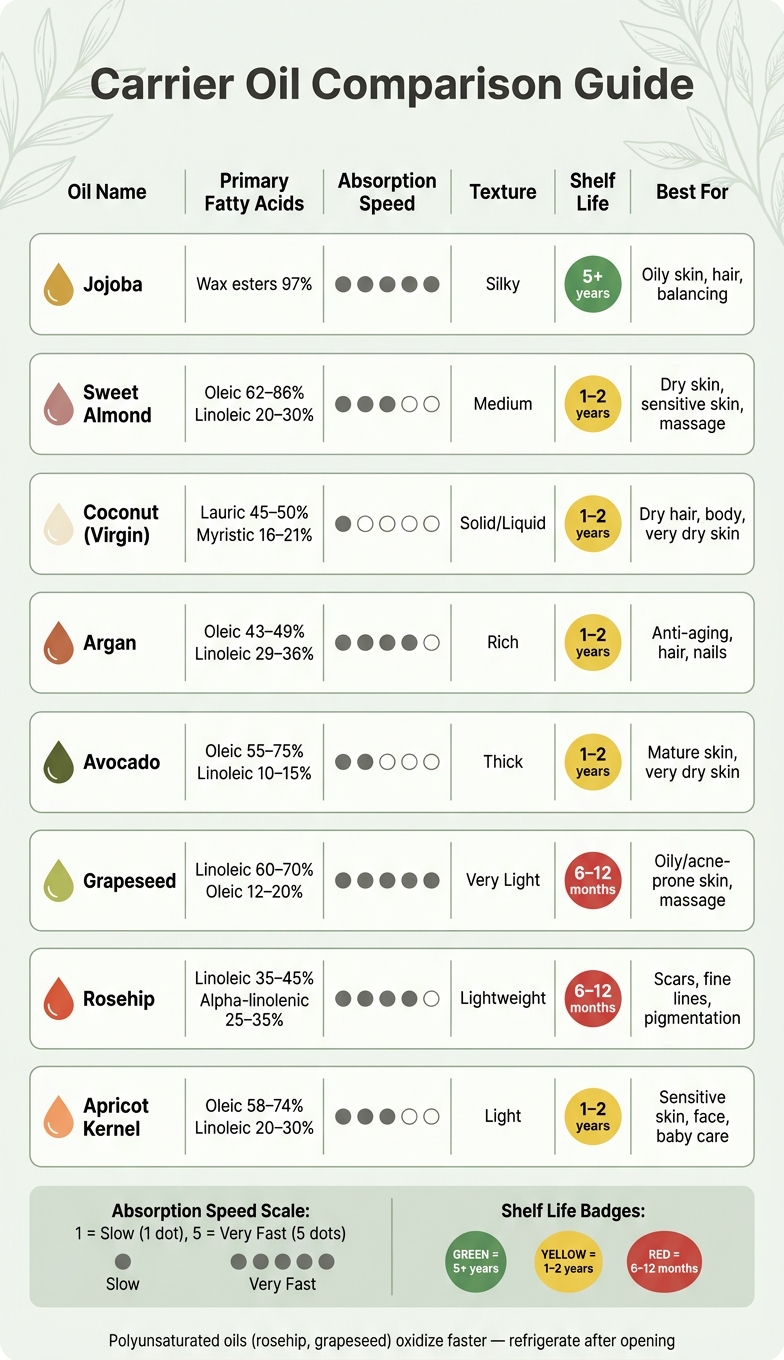
Carrier Oil Comparison: Skin Type, Absorption & Shelf Life
The same nutrients can act very differently depending on the oil. That's why some oils feel feather-light, while others feel dense and rich. The table below gives you a side-by-side look at eight common carrier oils used in wellness and aromatherapy blends. Use these patterns to line up fatty-acid balance, absorption speed, and skin feel with the kind of blend you want to make.
| Carrier Oil | Primary Fatty Acids | Notable Vitamins / Antioxidants | Texture | Absorption Speed | Best For |
|---|---|---|---|---|---|
| Jojoba | Wax esters (97%) | Vitamin E, B-complex | Silky, non-greasy | Fast | Oily skin, sebum balance, hair |
| Sweet Almond | Oleic (62–86%) | Vitamins A, E, K, zinc | Medium, slightly oily | Medium | Massage, sensitive skin, body |
| Coconut (Virgin) | Lauric (~50%) | MCTs, vitamin E | Rich, solid/creamy | Medium | Dry body skin, barrier support, hair care |
| Argan | Oleic (43–49%), linoleic | Vitamin E, polyphenols | Smooth, light to medium | Medium-fast | Mature skin, hair repair, face |
| Avocado | Oleic (52–66%) | Vitamins A, D, E | Thick, heavy | Slow | Very dry skin, deep moisture |
| Grapeseed | Linoleic (69–78%) | Vitamin E, antioxidants | Very light, thin | Very fast | Acne-prone skin, facial oils |
| Rosehip | Linoleic (35–44%), alpha-linolenic | Vitamin A (trans-retinoic acid), vitamin C | Lightweight | Fast | Scars, fine lines, glow |
| Apricot Kernel | Oleic (65%) | Vitamins A, B-complex, E | Light, mild sheen | Fast | Sensitive skin, mature face care |
Lightweight Oils for Daily Blends
Jojoba, grapeseed, and apricot kernel are solid picks when you want an oil that sinks in fast and doesn't leave that slick, greasy layer behind. Jojoba is a standout here. Its wax esters make it stable, light, and fast-absorbing, and its shelf life can stretch to 4–5 years, which is much longer than most other oils.
Grapeseed, on the other hand, contains more than 70% linoleic acid, which helps explain its thin, light finish. Apricot kernel sits in a nice middle ground. It feels light on the skin and brings a mix of B vitamins and vitamin E that works well for sensitive or mature skin.
When you want more slip, more weight, and slower absorption, richer oils tend to work better.
Richer Oils for Dry Skin
Avocado, coconut, and sweet almond sit on the heavier side of the spectrum. Avocado contains vitamins A, D, and E, along with a high oleic acid level that lets it penetrate more deeply than most oils. Because it absorbs more slowly, it tends to fit better in overnight treatments or on very dry patches like elbows, knees, and heels.
Coconut oil is made up of around 50% lauric acid. That gives it a strong barrier-support role and antimicrobial action. But there's a tradeoff: virgin coconut oil is also highly comedogenic, so it's often a better match for body care than facial use.
Sweet almond is a classic massage oil for a reason. It has excellent glide, oleic acid ranging from 62% to 86%, and a smooth skin feel that can leave a slight residue behind. If you're making a body blend and want that little bit of cushion, it's hard to beat.
Specialty Oils with Targeted Benefits
Argan and rosehip stand out for their antioxidant content. Argan brings a mix of oleic and linoleic acids, plus high levels of vitamin E and polyphenols. That makes it a smart fit for mature skin and hair repair, especially when you want nourishment without a heavy finish.
Rosehip leans more toward glow-focused care. Its linoleic acid content and vitamin A compounds help it absorb fast, which is one reason it's so often used for scars and fine lines. In practice, choosing between these oils often comes down to two things: pore-clogging risk and fatty-acid balance. Match those to your skin type, and you'll usually get better results.
How to Choose the Right Carrier Oil
Match the Oil to Your Skin Type and Routine
Start with your skin type and how you plan to use the oil. If you have oily or acne-prone skin, go with lighter oils for facial use or oily-skin routines. Grapeseed and rosehip sink in fast and are less likely to clog pores. If your skin is dry or more mature, oleic-rich oils tend to feel richer and take longer to absorb.
The type of product matters too. A light facial serum needs a different base than a body oil or massage blend. Once you’ve narrowed down the texture and absorption speed you want, the next step is checking the label for quality and freshness.
What to Look for on the Label
Look for cold-pressed oil first. This method uses low temperatures, usually below 110°F–120°F, which helps preserve heat-sensitive nutrients.
A few label details matter most:
- Cold-pressed - shows the oil was extracted with low heat
- Additive-free - skip fillers and added preservatives
- Dark glass - dark glass helps shield fragile oils from light
- Best-by date - this matters a lot for polyunsaturated oils like rosehip or grapeseed, which usually last only 6–12 months
Scent, Allergies, and Blend Goals
Unrefined oils keep their natural scent, and that scent can clash with essential oils. If you want the fragrance in your blend to come through more cleanly, odorless options like fractionated coconut oil or grapeseed usually work better as a base.
Allergy risk matters too. If you have a tree nut allergy, avoid nut-derived oils. Seed-based oils are often a better substitute.
The last piece is safe handling, including dilution and storage.
Safe Use, Storage, and Key Takeaways
Nutrient-rich carrier oils do their job best when you use them the right way and store them with care.
Patch Testing and Dilution Basics
Patch test every new well-being blend on your inner forearm for 24 hours before using it more broadly. If you notice redness, itching, or irritation, stop using it.
Dilution matters for a simple reason: it spreads the essential oil through more carrier oil, which lowers how much hits any one spot on your skin.
For standard adult body or massage use, a 2% dilution is a good rule of thumb. This is ideal for creating a relaxing sleep well oil blend. That’s about 6 drops of essential oil per teaspoon (5 mL) of carrier oil. For facial use, go with 1%, or about 3 drops per teaspoon. For infants or very sensitive skin, stay at 0.5%, which is just 1–2 drops per teaspoon.
Once a blend is skin-safe, the next step is protecting it from heat and light.
How to Store Carrier Oils Correctly
Storage has a direct effect on oil quality. When oils oxidize, they lose some of their skin-supporting properties and nutrient value.
Keep carrier oils in dark glass bottles, such as amber, and store them in a cool, dark place away from direct sunlight. If you have a partly used bottle, move the remaining oil into a smaller container. That cuts down air exposure.
Some oils need more attention than others. Polyunsaturated oils like rosehip and grapeseed oxidize faster, so they spoil sooner. Delicate oils high in polyunsaturated fats - like rosehip, evening primrose, and grapeseed - do better in the refrigerator and usually last only 6–12 months under good conditions. More stable oils like jojoba and fractionated coconut oil can last 5+ years and are usually fine at room temperature.
| Carrier Oil | Typical Shelf Life | Storage Recommendation |
|---|---|---|
| Fractionated Coconut Oil | 5+ years | Cool, dark place |
| Jojoba Oil | 5+ years | Cool, dark place |
| Castor Oil | 1–5 years | Cool, dark place |
| Sweet Almond Oil | 1–2 years | Cool, dark place |
| Rosehip Seed Oil | 6–12 months | Refrigeration recommended |
| Grapeseed Oil | 6–12 months | Refrigeration recommended |
| Evening Primrose Oil | 6–12 months | Refrigeration recommended |
If an oil smells musty, sour, paint-like, or waxy, it has gone rancid. Toss it. Oxidation also cuts down nutrient value, and oxidized oils can irritate skin.
For blends that use delicate polyunsaturated oils, adding 0.5%–1% vitamin E (tocopherol) can help slow oxidation and make the blend last longer.
FAQs
Which carrier oil is best for my skin type?
The best carrier oil comes down to your skin type and how fast you want the oil to sink in.
- Oily or acne-prone skin: grapeseed or rosehip oil
- Dry or mature skin: avocado or sweet almond oil
- All skin types: jojoba oil, since it closely mimics natural sebum
How can I tell if a carrier oil has gone rancid?
Check whether the oil smells strong, bitter, or just off compared with a fresh sample. You may also notice changes in how it looks or feels. The oil can lose its original color, turn tacky or sticky, or seem unusually thin when temperature isn't the reason.
Still, smell on its own isn't enough. Oxidation can be far along before clear warning signs show up. If the oil is rancid, discard it, since it may irritate the skin.
Should I refrigerate all carrier oils?
No. Not all carrier oils need refrigeration, although chilling them can help them last longer.
Some oils are more stable and usually do fine at room temperature. That includes jojoba oil and fractionated coconut oil. On the other hand, oils that are high in unsaturated fats - like flaxseed oil and hemp seed oil - go bad faster because they oxidize more easily. Those oils tend to do better in the fridge.
No matter which carrier oil you use, storage still matters. Keep it in a dark, airtight container and place it somewhere cool and dry, away from heat and light.